Buona Sera!
It's Foodie Friday and we're going on a trip down memory lane. Come and join us!
As I've mentioned before, I spent my childhood summers in Italy visiting my maternal grandparents. My mother also had a brother 8 years her junior. When I was somewhere around 9 or 10, my Zio Franco met a girl- a beautiful, elegant girl who enthralled all who met her- including him. When they announced they were marrying, we were all thrilled and the wedding was a grand event (another post). Since he was still an Italian Air Force pilot, he would be required to live wherever he was assigned and it was determined that their married life would begin in Lecce
I found a bit of information about Lecce on the Web that describes the area and the cuisine that I came to love:
Puglia is the region encompassing the heel and spur of the boot, the main cities being Bari, Brindisi, Foggia, Lecce, and Taranto.
Lecce is a city and also the capital of the province of Lecce. Also known as ‘La Firenze del Sud’, meaning ‘Florence of the South’, it has a population of around 95,000 inhabitants. The city is famous for its beaches as well as the it’s famed Baroque architecture.
Initially, a Greek city, and then, a Roman town, Lecce developed to become one of the most important cities of Italy. Today, the city is an important agricultural and industrial centre with oil, ceramics and wine being the main industries.
Situated at the south-eastern edge of Italy, the province occupies the area called Penisola Salentina with the Adriatic Sea to the east and the Ionian to the south and west, a unique landscape of rugged, reddish territory, villages of white-painted houses, all between sea and sky of astounding blue, and including the two splendid lakes of Alimini Grande and Alimini Piccolo. Here and there magnificent churches and palaces, witnesses of the historical heritage of crossroads of cultures, thanks to the strategical position on the channel of Otranto.
One of the most vivid memories I have of driving down to Lecce was the view of the town as we approached- it was blindingly white against the bluest sky you've ever seen.

Also the local cuisine shows traits of the Arab, Spanish and Greek dishes, and the local dialect has many similarities with ancient Greek.
The ancient name of the province was Terra d’Otranto, with capital Lecce, including also the territory of the present province of Taranto.
Lecce was called Lupiae in ancient times. Even today, the town centre has kept something of the colours and art of a Messapian town. This marvellous town is the regional capital of the most southern area in Italy and represents a shining symbol of Salento; a land rich in art, culture and folklore which has been handed down to us from our wise ancestors. Yet Lecce is more than a centre for art and culture; it is a mixture of warmth and rich flavours. These are flavours unique to the land around Lecce. People have lovingly tilled the soil here and harvested their crops for centuries. Mother earth has been generous in Lecce, bestowing the area with magnificent olive groves and fantastic vineyards.
This is the southern-most tip of the stiletto heel and the first place in Italy to see the sun rise
Lecce boasts a unique gastronomic and culinary treasure trove which is mostly thanks to the areas natural products and the traditions of peasant cookery. The basic ingredient for almost all of Salento dishes is olive oil. Gabriele d'Annunzio himself sung the praises of the oil, writing that it travelled from the ancient oil-presses as far as England. Indeed, olive oil is the element of Pugliese cookery which makes Salento one of the most renowned eating areas in Italy.
Wine is also an important element in traditional cookery and it is known as "lu mieru" in Lecce dialect. Homer wrote of a "sea of wine": in September the sea becomes dark because of the sea storms and during the grape harvest the sea around Puglia turns the colour of wine. Lecces wines are a good accompaniment for a meal or a dessert and can be used for blends. Each wine carries with it the flavours, scents and colours of the earth and air of its vineyard.
This is also true of the areas vegetables, the fruits of the earth, which have particularly rich colour and flavour thanks to Salentos fertile soil. For instance, it is only here, in the heel of Italy, that you can try lampascioni, a wild muscari onion.
Salento is also a rich fishing area. Using the fish that they catch in the crystal clear sea, they make a wonderful fish soup. This contains top-quality fish which have rare and unforgettable flavours. The most famous of these dishes is called "taieddra". This contains courgettes, cherry tomatoes and sea food.
There are also plenty of traditional recipes which have been handed down from our grandparents. These include dishes like "ciceri e tria" which is a kind of homemade lasagna with chick peas, or tasty horsemeat spiced up with some chili peppers.
There is also wide range of dairy products from mozzarella to curds, all of which are made with sheep or goats milk. These are beautifully prepared and they still make marzotica ricotta and burrata using the same old traditional recipes.
The other essential element of the Salento diet is bread. Great care is taken in the preparation of oiled breads and Pizzi, both typical breads from Lecce.
Finally, there are the famous Pugliese desserts and pastries like strufuli, cartellate and cupete with toasted almonds. A visit to Lecce is not complete without trying a "pasticciotto" filled with cream or a "fruttone" with stuffed with marzipan and covered with chocolate. Lecce has one of the best cuisines in Italy and this is thanks to a combination of the love and care which they put into their cookery, and the old traditional recipes and high quality local produce. Chefs in Lecce love the land around them and use local produce because they know it is the best. They serve beans with chicory beard, which comes from the wild chicory which grows in the countryside. This is seasoned with the olive oil of the highest possible quality.
Puglia is adorned with a long, beautiful coast line, largely free of tourists and development. The heel and spur of Italy's boot produces hearty fruits and vegetables, a main addition of Puglian cuisine.
Tomatoes, fennel, peppers, lettuces, wild chicory and onions grow well there and are eaten raw at the beginning of a meal or served at the end of a meal with fruit. Between courses, pasta takes center stage. The types and shapes of pasta, made from Italy's best durum wheat, are more numerous here than in any other area of Italy. The most popular cuts are maccheroni, spaghetti, cavatelli, tiny gnocchi, and the region's most famous creation, orecchiette ("little ears"). Pasta sauces typically contain cauliflower, eggplant, chickpeas, fava beans, and broccoli florets.
Sheep's milk cheese is another important component of Puglian cuisine, as is the bounty of excellent seafood (particularly oysters, mussels and clams pulled from the Adriatic Sea.
Puglia is also reputed for its fabulous deep green olive oil, which competes with Tuscany and Liguria in quality. But grapes are probably the region's most important crop, as Puglia produces more grapes, both for eating and wine-making, than any other region in Italy. The main cultivations are olive trees and vineyards, whose production is of high quality and renowned all over Italy and beyond, as well as artichokes, tomatoes and watermelons.
Back in those days, (yes- the dinosaur era), proper unmarried couples did not travel alone. So during their engagement while they were preparing their apartment for after the honeymoon, my mother was appointed chaperone. ( We still laugh about that- my mom is quite naive about many things and is still the easiest person EVER to pull something over on!) We made numerous trips to the area both before the wedding and after to visit the newly married couple.
My Zia Luciana was a fabulous cook and quickly learned the area specialties during her time there. The cuisine in the Puglia region is of the "Cucina Povera"- Kitchen of the Poor- or more readily known as peasant fare. Simple, hearty, flavorful, and always with the freshest ingredients.
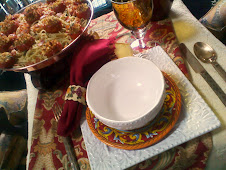
Ciceri e Tria is a beloved and traditional dish of Salento. It's a brothy pasta and chickpea dish. A third of the pasta is fried, the rest boiled directly into the broth. Its soupiness varies and sometimes you'll need a spoon and sometimes you won't. Cheese is not usually used, though I do. :) The fried pasta was meant to mimic the texture of meat, back when it was hard to come by.
I'm giving you a method here- not exact amounts as I don't measure.
dried chickpeas, soaked overnight
carrots, onions, and celery- coarsely chopped
olive oil
salt, red pepper flakes, bay leaves
chopped parley
wide pasta noodles, preferably fresh. If you don't make pasta, use a commercial fresh pasta.
Drain the chickpeas and add to a pot of water. Water should cover chick peas by an inch or two. Simmer till tender, making sure to keep the water an inch or two above the peas- you may have to add hot water periodically. Remove half of chick peas and put them in a food processor to puree. Saute vegetables in some olive oil for a few minutes over high heat till beginning to soften and brown.Add the vegetables, bay leaves, puree, red pepper flakes and salt to the whole chick peas and simmer until tender.
Take a third of the pasta and fry in small batches, in extra virgin olive oil.
Add the raw pasta to the chick peas and cook till tender.
Cook until tender. Check for seasoning. Add fried pasta, the diced parsley and drizzle with olive oil.
In Italy, soup is served year round. During the summer, traditional vegetable soups are served at room temperature. In the Southern regions, the fare is traditionally heartier to sustain the farmers and field workers through their day. This typical Puglian vegetable soup, or Minestrone (big soup), is almost a vegetable stew or "giambotta". It is thick and can be served with or without pasta or beans. Made very early in the cool morning and left to sit at room temperature, it just gets better
Summer Puglian Minestrone Stufata
Stufata means a cooking technique similar to a braise, in which the ingredients are cooked in little or no water; the juices from the vegetables themselves serve to give the soup its broth. This is a thick soup that should be served immediately, as the vegetables absorb the small amount of liquid and it becomes more of a giambotta or vegetable stew
2 small eggplants
sea salt
2 medium potatoes
2 medium carrots
2 red or yellow bell peppers
1/4 cup olive oil, plus a more for garnish
1 medium onion, coarsely chopped
1 stalk celery, chopped
1 small bunch fresh green or red chard, thinly sliced
1/2 lb green beans, sliced in 1 inch lengths
6 ripe red tomatoes, peeled and coarsely chopped
2 medium zucchini, cubed
1/2 cup wine
1/2 cup coarsely chopped flat-leaf parsley
3 sprigs fresh oregano
1 bay leaf
1 sprig fresh rosemary
red pepper flakes, if desired
Cut the eggplant in 1-inch cubes. Place the cubes in a colander, sprinkling them liberally with salt. Weight the eggplant and set the colander in the sink to drain for at least 1 hour. Then rinse the cubes thoroughly and pat dry with paper towels.
Cut the potatoes and carrot into cubes the same size as the eggplant.
Cut the peppers in half lengthwise, discard the seeds and inner white membranes, and slice thinly.
Add the oil to a big heavy saucepan or rondeau large enough to hold all the vegetables and place over medium-high heat.
Quickly sauté the eggplant and potatoes till they just start to brown.
Stir in the onion and celery and continue cooking until the onion softens and starts to turn golden.
Add the carrot, chard, green beans, and peppers and stir to mix well.
Add 1/2 cup hot water or vegetable broth and 1/2 cup wine to the vegetables in the pan, cover, and cook together for about 5 minutes, then stir in the chopped tomatoes, zucchini, and the herbs, together with the hot pepper if desired.
Season with salt, cover tightly, and cook for 30 minutes, adding a very little liquid periodically if necessary.
Remove oregano sprigs, bay leaf and rosemary sprig before serving. I added some thin spaghettini, broken into 2 inch pieces, and cooked separately. This prevents the pasta from absorbing the little bit of broth. When storing, keep the cooked pasta and soup separate.
Drizzle each serving with a bit of olive oil.

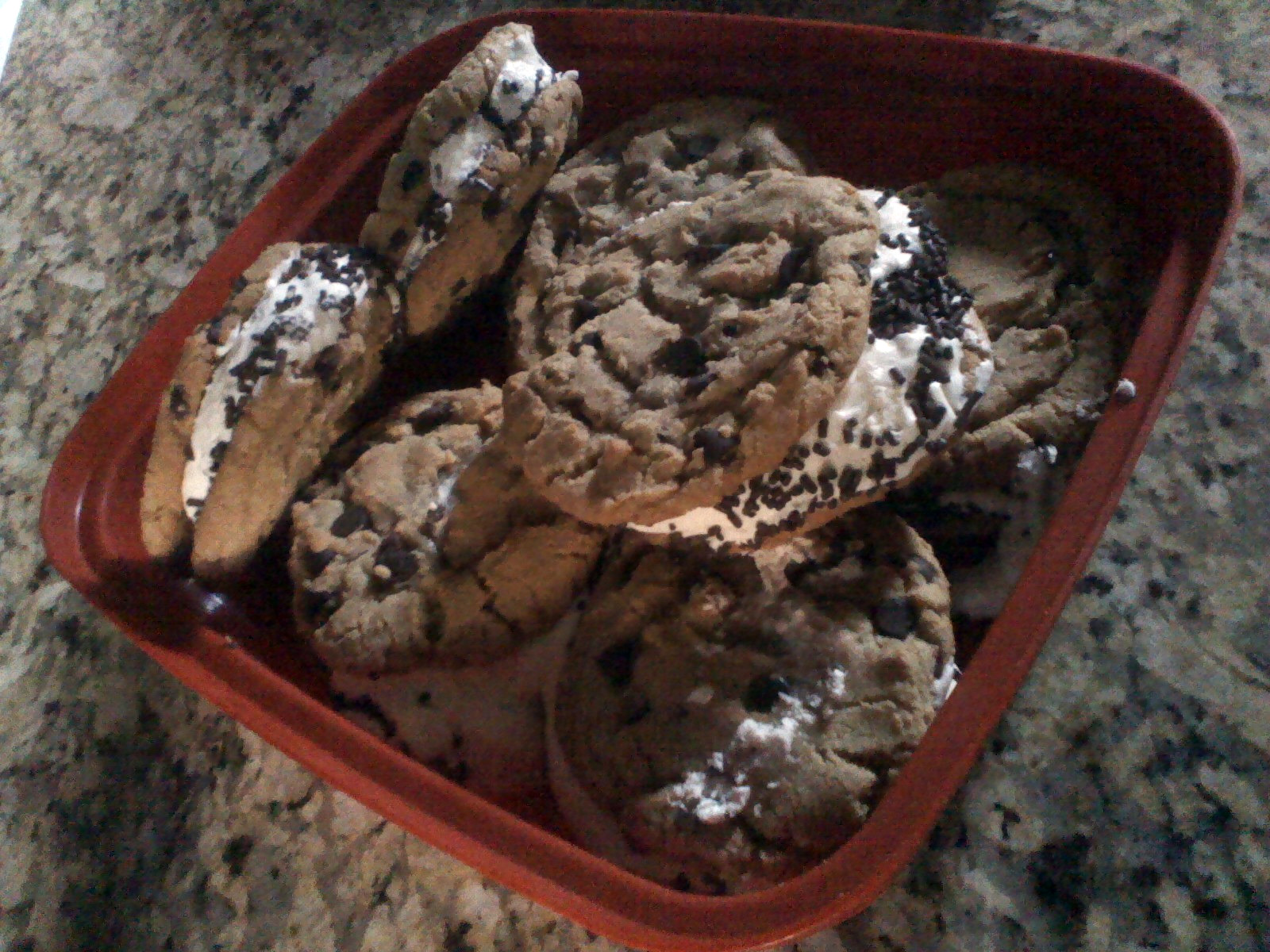
Dessert. You knew there was going to be a dessert, didn't you? Rather than a heavy pastry to end a summer meal, this is a traditional light "Rossette". These are a light crisp fried pastry shell which can be served filled with whipped cream, pastry cream, or a ricotta cannoli cream as I have done. OR, they can be simply sprinkled with powdered sugar and served as an accompaniment to a good strong espresso.
These are made with a special iron (my kids think it's an Italian branding iron) which can be purchased in various shapes
My original came from my Nonna in Italy, but I have since replaced them at Kitchenworks
Rossette
1 egg
1/2 cup evaporated milk
1/2 cup water 1/3 cup beer
3 TBSP grated orange rind
3 TBS sugar
1 cup flour
3/4 tsp mint extract
Canola Oil
In electric fry pan, bring oil to 375 degrees. Whisk all batter ingredients together till smooth. Have a rack over a baking pan at the ready and a pair of tongs.
Submerge iron in hot oil for about 30 seconds. Blot lightly on a paper towel and dip into batter. Be SURE not to submerge- batter should not exceed 3/4 of the depth of the mold. Submerge in hot oil and hold till you see the pastry start to separate from the iron. at this point, you can help it a little with the point of a sharp knife. Let the pastry drop into the oil and allow to cook till golden brown, flipping with tongs halfway through. Drain upside down on rack and allow to cool completely before filling or sprinkling with sugar. Enjoy!
Come join us at Designs by Gollum for the Foodie Friday Festival of delights. A huge thank you to Michael for hosting and allowing us to have this fabulous party every week
Be sure to follow us as we learn what blogging is all about. And if you're a Facebooker, become a Fan of Bramasole (the link is on the sidebar)- we post bonus recipes and tips for our Facebook friends
As Always,
Buon Cibo, Buon Amici,
Pattie and Allie






 Posts
Posts